
Tasmanian Country: Low Emissions Livestock project launched at Landfall
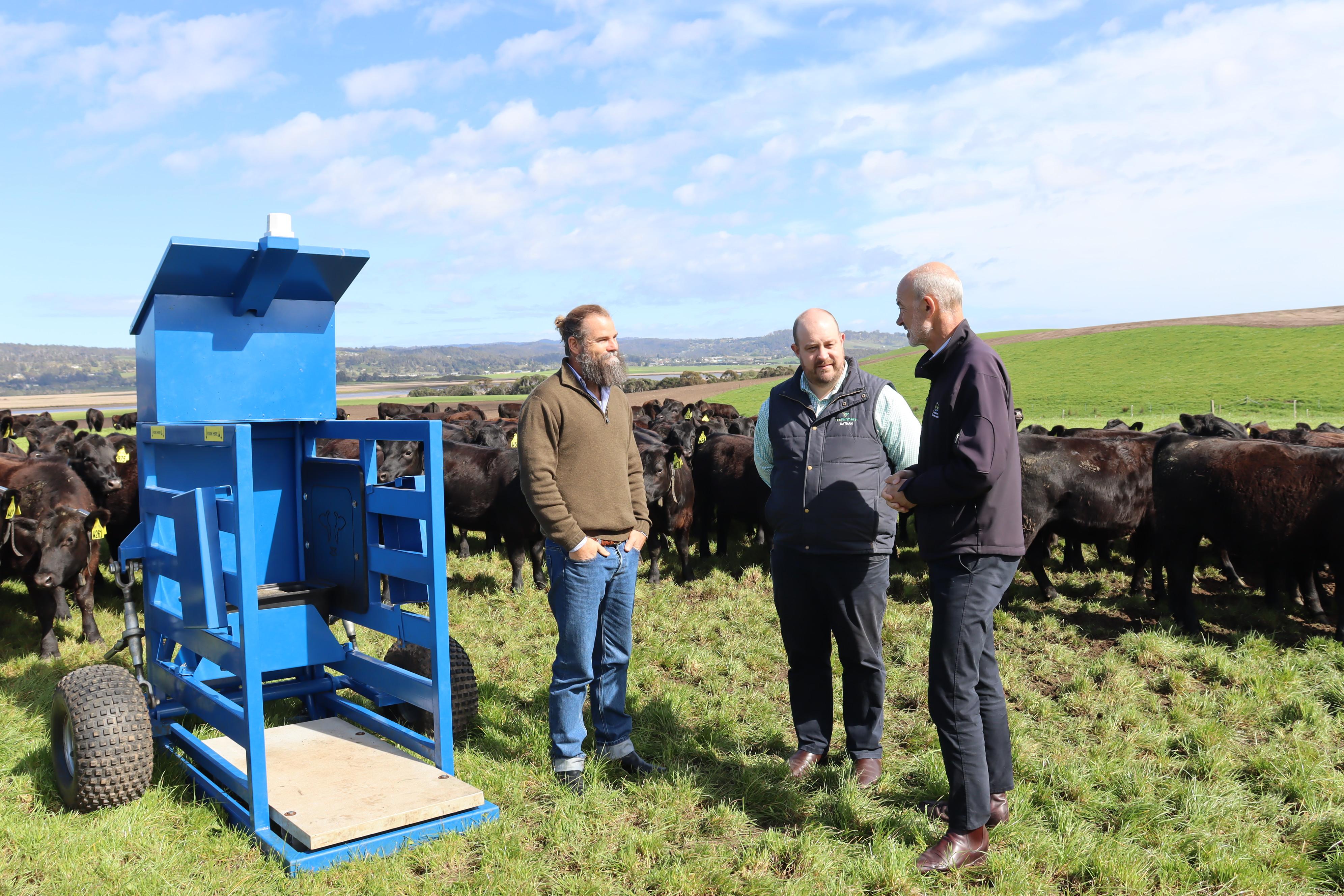
Sea Forest CEO Sam Elsom, TasFarmers CEO Nathan Calman and Deputy Premier Guy Barnett at Landfall. Source: Tasmanian Country
Tasmania's Low Emissions Livestock (LEL) project has moved into pasture-based beef, taking Sea Forest's SeaFeed™ out of the feedlot and onto working grazing properties. The project is delivered by TasFarmers with Sea Forest and the Tasmanian Institute of Agriculture. Deputy Premier and Minister for Environment and Climate Change Guy Barnett visited Angus stud Landfall's Dilston headquarters to launch the next phase and see the technology in the paddock.
How the trial works
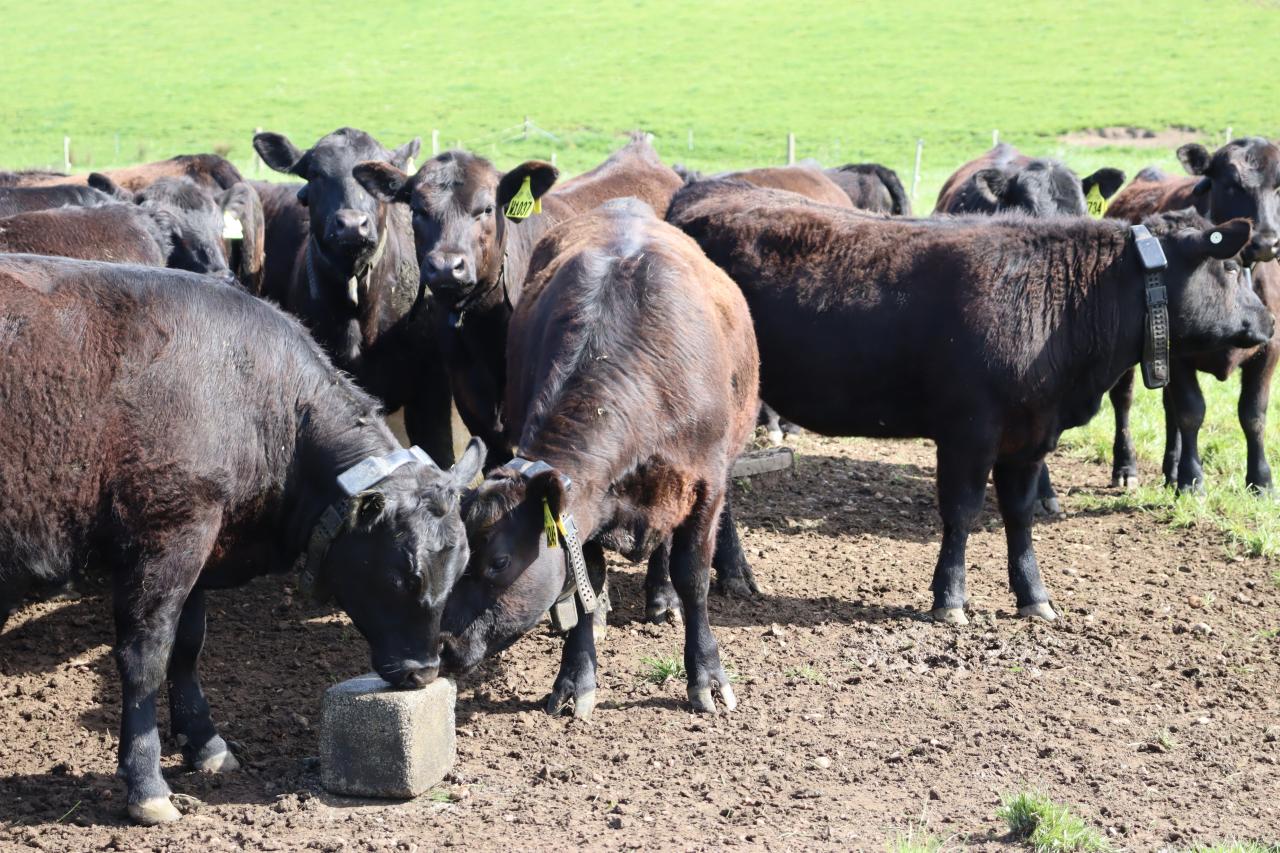
Trials are underway on Landfall's Sassafras farm and at Clovelly Tasmania's livestock operation at Bowood, near Bridport. Cattle have access to SeaFeed™ lick blocks, made with 5 per cent native Tasmanian Asparagopsis seaweed, salt and a molasses sweetener.
To reach the blocks, the cattle step onto Optiweigh scales, which read each animal's ear tag and record its weight throughout the day. That gives farmers daily, individual weight-gain data alongside the emissions results, rather than a weigh-in every month or two. At Landfall, two trial groups of 200 head are being compared against a control group of 120.
Early results
According to Minister Barnett, the LEL project has already shown methane emissions from grazing livestock can be cut by more than 20 per cent without compromising farm productivity.
The early commercial signal is just as important. Landfall north-west farm manager Ferghal Berry said the extra weight gain is already paying for the product:
"So far we're seeing a big enough increase in weight gain above what we would normally expect to cover the cost of lick blocks – plus the emission reduction is a win for the environment." – Ferghal Berry, Landfall
Why it matters
The project previously focused on feedlot and dairy systems. This phase tests SeaFeed™ on pasture, which is how most Tasmanian farmers run their livestock. The trial is also being run in the open, with results published on a public website as they come in so farmers can see the data for themselves.
For Sea Forest, the focus is on showing producers a return as well as an emissions reduction. CEO Sam Elsom said:
"We've been developing these feed supplements since 2018 and we know they can deliver the methane abatement, now we just need to get the farms to use it … Instead of energy being lost to the atmosphere as a greenhouse gas, that energy is preserved by the animal and used to help it grow – that means more kilograms of beef and more money for farmers." – Sam Elsom, CEO, Sea Forest
The work also supports Tasmania's target of net zero emissions, or lower, from 2030. Livestock is a significant contributor to the state's greenhouse gas emissions.
Follow the trial results as they come in at taslowemissionslivestock.com.au